

How are outdoor composite boards made?
Jan 15, 2026
Leave a message
Outdoor composite boards have become a popular choice for various outdoor applications, including decks, patios, and pool areas, due to their durability, low maintenance, and aesthetic appeal. As a leading supplier of Outdoor Composite Boards, I am often asked about the manufacturing process behind these innovative products. In this blog post, I will take you through the step-by-step journey of how outdoor composite boards are made.
Raw Materials Selection
The first and most crucial step in the production of outdoor composite boards is the selection of raw materials. These boards are typically made from a combination of wood fibers and recycled plastics. The wood fibers can come from various sources, such as sawdust, wood chips, or bamboo. These natural materials provide the boards with a warm, natural look and feel.
On the other hand, recycled plastics, such as high-density polyethylene (HDPE) or polypropylene (PP), are used to enhance the boards' durability and resistance to moisture, insects, and rot. Using recycled plastics not only reduces the environmental impact but also makes the boards more cost-effective.
At our company, we are committed to using high-quality raw materials. We source our wood fibers from sustainable forests and ensure that the recycled plastics meet strict quality standards. This attention to detail in raw material selection is the foundation for producing top-notch outdoor composite boards.
Mixing the Raw Materials
Once the raw materials are selected, they are carefully measured and mixed together in a large mixer. This process is crucial as it ensures an even distribution of the wood fibers and plastics throughout the mixture. Additives are also introduced during this stage to enhance the boards' performance.
These additives can include UV stabilizers to protect the boards from sun damage, fire retardants for safety, and colorants to achieve the desired aesthetic. The mixing process is typically carried out at a specific temperature and speed to ensure that the materials are thoroughly combined.
Extrusion Process
After the raw materials are mixed, the next step is the extrusion process. The mixture is fed into an extruder, which is a large machine that heats and melts the materials. The molten mixture is then forced through a die, which is a specially designed tool that gives the board its shape.
There are different types of dies used depending on the desired profile of the board. For example, some boards may have a smooth surface, while others may have a textured or grooved design for better traction. The extrusion process allows for a high degree of customization, enabling us to produce a wide range of outdoor composite boards to meet our customers' needs.
During extrusion, the temperature and pressure are carefully controlled to ensure that the board has the right density and strength. Once the board exits the die, it is cooled rapidly to set its shape. This cooling process is critical as it affects the board's final properties, such as its dimensional stability.
Post - Extrusion Treatment
After the extrusion process, the boards undergo post - extrusion treatment. This may include cutting the boards to the desired length, sanding the edges for a smooth finish, and applying a protective coating. The protective coating can further enhance the boards' resistance to scratches, stains, and fading.
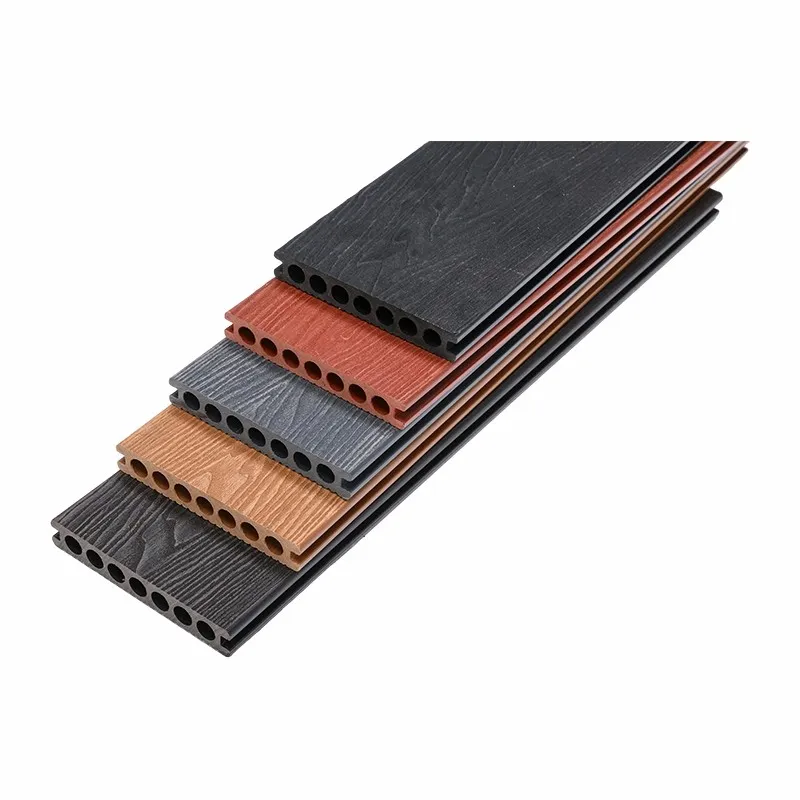
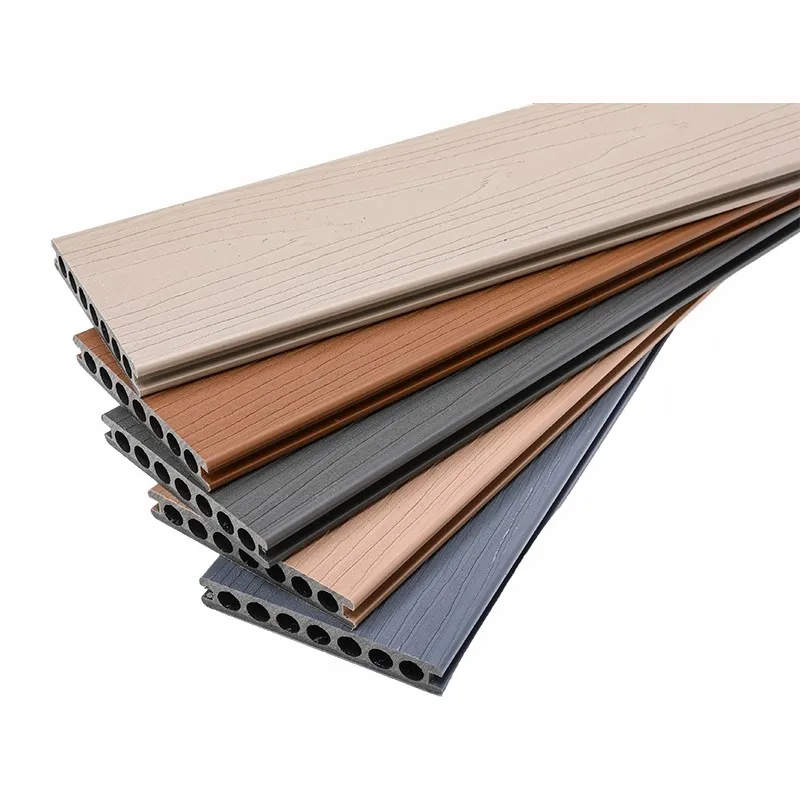
Some of our outdoor composite boards, such as the Hollow Composite Deck Board, are designed with a hollow core. This design not only reduces the weight of the board but also provides additional insulation and ventilation. The post - extrusion treatment for these boards is tailored to ensure the integrity of the hollow structure.
Quality Control
Quality control is an integral part of the manufacturing process. At every stage, from raw material selection to post - extrusion treatment, our products are rigorously tested to ensure they meet or exceed industry standards.
We conduct various tests, including strength tests, moisture resistance tests, and colorfastness tests. For example, we test the boards' ability to withstand heavy loads to ensure they are suitable for outdoor use. We also check the boards' resistance to water absorption to prevent swelling and warping.
Only after passing these strict quality control checks are the outdoor composite boards ready for packaging and shipping. This commitment to quality is what sets our products apart from the competition.
Applications of Outdoor Composite Boards
Outdoor composite boards have a wide range of applications. One of the most common uses is for decking. They are a popular alternative to traditional wood decks because they require less maintenance and are more durable. Our Composite Anti Slip Decking is specifically designed for areas where safety is a concern, such as around swimming pools or on stairways.
Another application is for pool areas. Our WPC Decking for Swimming Pool is resistant to water damage and provides a comfortable and safe surface for pool users. These boards can also be used for patios, pergolas, and other outdoor structures.
Conclusion
In conclusion, the manufacturing process of outdoor composite boards is a complex and carefully controlled process that involves multiple steps. From raw material selection to quality control, every stage is crucial in producing high - quality boards that meet the needs of our customers.
As a supplier of Outdoor Composite Boards, we are dedicated to providing our customers with the best products on the market. Our commitment to using high - quality raw materials, advanced manufacturing techniques, and strict quality control ensures that our boards are durable, beautiful, and environmentally friendly.
If you are interested in purchasing outdoor composite boards for your next project, we would love to hear from you. Whether you need decking for your backyard, anti - slip decking for a commercial pool, or any other outdoor composite board solution, our team of experts is ready to assist you. Contact us today to discuss your requirements and start your journey towards a beautiful and functional outdoor space.
References
- "Composite Decking: A Guide to Materials and Installation" by Building Products Magazine
- "The Science of Extrusion in Manufacturing" by Industrial Manufacturing Journal
- "Sustainable Materials in Outdoor Construction" by Green Building Research Institute